



ERβ
ERβ (estrogen receptor beta, ESR2) is a ligand-activated nuclear receptor that regulates transcriptional programs controlling cellular differentiation, proliferation, and tissue homeostasis through estrogen-responsive gene networks[1]. Mechanistically, ERβ functions as a transcription factor and can modulate estrogen signaling by interacting with target promoters and forming heterodimers with related estrogen receptor isoforms[2]. Through these activities, ERβ influences gene expression patterns associated with cell-cycle regulation and cellular growth control, making it an important regulator of physiological and pathological processes[1][2]. In disease contexts, reduced ERβ expression has been reported in multiple tumor types, and accumulating evidence supports a tumor-suppressive role for ERβ in cancer biology[1]. Experimental studies further demonstrate that ERβ activation can suppress proliferation and alter migration-associated transcriptional programs, supporting its utility in mechanistic cancer models[3]. Compared with the closely related isoform ERα, ERβ displays distinct transcriptional properties and can inhibit ERα-driven transcriptional activity under specific conditions, thereby reducing cellular sensitivity to estradiol signaling[2]. Structural analyses additionally indicate that ERβ adopts ligand-binding domain conformations that differ from ERα, providing a molecular basis for subtype-specific functional responses and pharmacological selectivity[4]. For experimental applications, several ERβ-selective agonists have been developed and are widely used to investigate ERβ-dependent signaling pathways, isoform-specific biology, and therapeutic mechanisms while minimizing ERα-mediated proliferative effects[5].
References:
- [1]. Mal R, et al. Estrogen Receptor Beta (ERβ): A Ligand Activated Tumor Suppressor. Front Oncol. 2020 Oct 23;10:587386. [Content Brief]
- [2]. Hall JM, et al. The estrogen receptor beta-isoform (ERbeta) of the human estrogen receptor modulates ERalpha transcriptional activity and is a key regulator of the cellular response to estrogens and antiestrogens. Endocrinology. 1999 Dec;140(12):5566-78. [Content Brief]
- [3]. Song D, et al. ERα and ERβ Homodimers in the Same Cellular Context Regulate Distinct Transcriptomes and Functions. Front Endocrinol (Lausanne). 2022 Jul 6;13:930227. [Content Brief]
- [4]. Souza PCT, et al. An alternative conformation of ERβ bound to estradiol reveals H12 in a stable antagonist position. Sci Rep. 2017 Jun 14;7(1):3509. [Content Brief]
- [5]. Paterni I, et al. Estrogen receptors alpha (ERα) and beta (ERβ): subtype-selective ligands and clinical potential. Steroids. 2014 Nov;90:13-29. [Content Brief]
All Product Categories
-
ERβ Inhibitors
(4)
View all products
-
ERβ Agonists
(15)
View all products
-
ERβ Antagonists
(8)
View all products
-
ERβ Activators
(3)
View all products
-
ERβ Modulators
(12)
View all products
-
ERβ Chemical
(1)
View all products
-
ERβ Degraders
(6)
View all products
-
ERβ Ligands
(2)
View all products
-
ER-beta Proteins
(1)
View all products
-
ERβ Related Products (53)
Related Products (53)

-
Recombinant Proteins (1)
-
ent-Estradiol
 0 ImagesSynonyms: ent-β-Estradiol; ent-17β-Estradiol; ent-17β-OestradiolEnt-Estradiol is the enantiomer of Estradiol (HY-B0141). Ent-Estradiol is a highly selective estrogen receptor ligand, but does not possess estrogenic activity. Ent-Estradiol displays IC50 values of 24.9 nM, 9.59 nM and 8.17 nM for human, rat and mouse ERβ, and 151 nM, 246 nM and 268 nM for human, rat and mouse ERα, respectively. Ent-Estradiol can be used for the study of menopausal physiological changes.
-
EGX358
 0 ImagesCat. No.: HY-186284CAS No.: 2245952-60-5EGX358 is a selective, orally active estrogen receptor β (ERβ) agonist with an EC50 of 27.4 nM for ERβ. EGX358 enhances object recognition ability, spatial memory and memory consolidation, and attenuates drug-induced vasomotor responses. EGX358 alleviates partial uterine atrophy without inducing uterine hypertrophy, while it does not alter anxiety-like behavior, depression-like behavior or body weight. EGX358 can be used in research related to Alzheimer's disease and menopause.
-
Estrogen receptor modulator 6
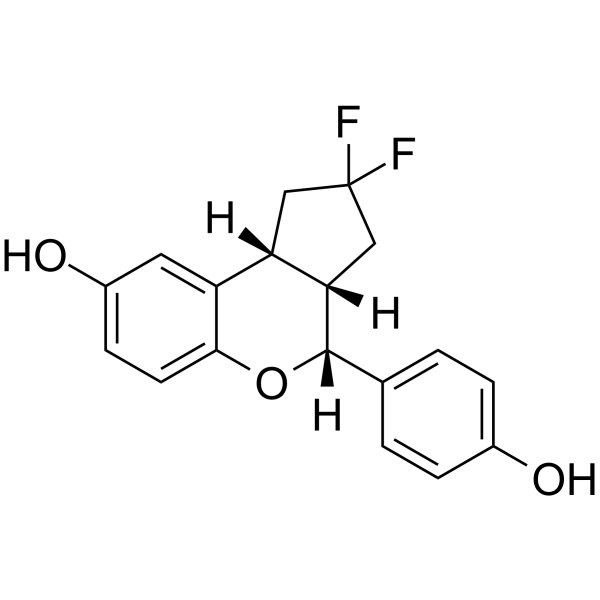 0 ImagesCat. No.: HY-138690CAS No.: 787621-78-7Estrogen receptor modulator 6 (compound 3a) is a selective estrogen receptor (ER) β agonist (Ki=0.44 nM). Estrogen receptor modulator 6 displays 19-fold selectivity for ERβ over ERα(Ki=8.4 nM).
-
Mansonone F
 0 ImagesMansonone F acts as an estrogen receptor antagonist and an antimicrobial agent. Mansonone F effectively inhibits 17β-estradiol-induced β-galactosidase activity. Derivatives of Mansonone F also exhibit antioxidant and anti-Staphylococcus aureus biological activities. Mansonone F can be used in studies related to Staphylococcus aureus infections and methicillin-resistant Staphylococcus aureus (MRSA) infections.
-
PROTAC ERα Degrader-11
 0 ImagesCat. No.: HY-174870PROTAC ERα Degrader-11 is a selective and intrinsically fluorescent (Ex: 366 nm, Em: 440 nm) ERα PROTAC degrader. PROTAC ERα Degrader-11 shows good antiproliferative activity, selective ERα degradation and imaging capabilities in MCF-7 breast cancer cell lines. PROTAC ERα Degrader-11 induces G2/M phase arrest and induces apoptosis in MCF-7 cells. PROTAC ERα Degrader-11 is well-tolerated up to a dose of 500 mg/ kg with no acute toxicity in athymic nude mice. PROTAC ERα Degrader-11 can be used for the study of breast cancer.(Pink: ERα ligand (HY-167701), Blue: CRBN Ligand (HY-150831), Black: Linker, E3 ligase ligand-linker conjugate (HY-174880)).
-
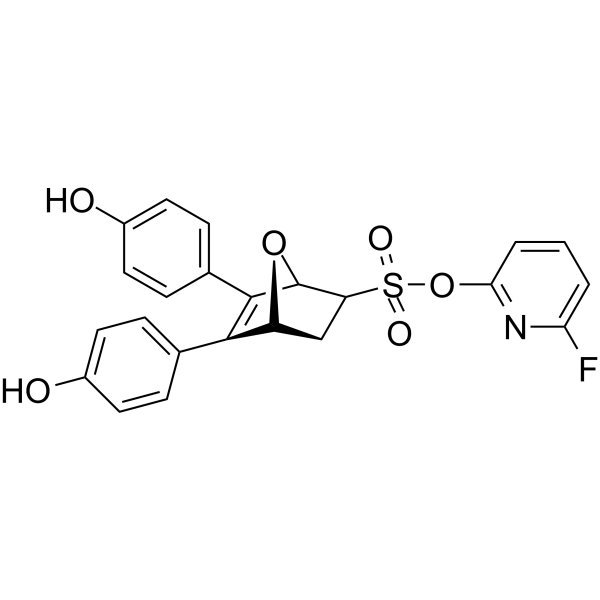
(R)-DPN
 0 ImagesCat. No.: HY-103453CAS No.: 524047-78-7
-
ERβ-targeted NIR probe P5
 0 ImagesCat. No.: HY-D3614CAS No.: 2890606-81-0ERβ-targeted NIR probe P5 is an ERβ-selective fluorescent probe that binds preferentially to ERβ over ERα, enabling near-infrared fluorescence imaging of ERβ in living cells and in vivo. ERβ-targeted NIR probe P5 supports measurement of ERβ diffusion coefficient via fluorescence recovery after photobleaching. ERβ-targeted NIR probe P5 shows low cytotoxicity across multiple cell types, preserves ERβ expression, accumulates at ERβ-overexpressing tumor sites in vivo, and exhibits minimal fluorescence fluctuation across varied pH and cellular analyte conditions. ERβ-targeted NIR probe P5 can be used for the research of prostate cancer.
-
4,4'-(Cyclohexylidenemethylene)diphenol
 0 ImagesCat. No.: HY-W615671CAS No.: 5189-40-2
-
PaPE-1
 0 ImagesCat. No.: HY-167151CAS No.: 2107327-36-4PaPE-1 is a pathway-preferential estrogen receptor (ER) agonist that preferentially activates ER non-nuclear-initiated signaling while minimally activating nuclear-initiated signaling. PaPE-1 exhibits Ki values of 10 μM and 25 μM for human ERα and ERβ, respectively. The relatively low ER affinity and rapid receptor dissociation of PaPE-1 facilitate the triggering of non-nuclear mTOR/MAPK/AKT signaling, while reducing the recruitment of ERα to chromatin and sustained nuclear ER-dependent transcription. PaPE-1 is suitable for research related to non-nuclear ER signaling, metabolic disorders, ischemic brain injury, Alzheimer's disease, and ER-positive breast cancer.
-
Endoxifen (Z-isomer methanesulfonate)
 0 ImagesCat. No.: HY-18719HCAS No.: 1032008-71-1Endoxifen Z-isomer methanesulfonate is an orally active selective PKCβ1 inhibitor with an IC50 of 360 nM against human PKCβ1. It also acts as an estrogen receptor modulator and antiestrogen. Endoxifen Z-isomer methanesulfonate binds to and blocks ERα, ERβ and PKCβ1, inhibits estrogen and PI3K/AKT/mTORC1 signaling pathways, suppresses the expression of genes associated with cell cycle, cell proliferation and extracellular matrix remodeling, and induces apoptosis, reactive oxygen species (ROS) production and hypoxic features. Endoxifen Z-isomer methanesulfonate inhibits tumor growth in breast tumor and glioblastoma models, reduces bone turnover and blood lipid levels, and does not require metabolism via CYP2D6. It can be used in research related to ER+ breast cancer, invasive breast cancer, glioblastoma multiforme, type I bipolar disorder, desmoid tumor, gynecological malignancies, melanoma and hormone receptor-positive solid tumors.

-
(+)-Medicarpin
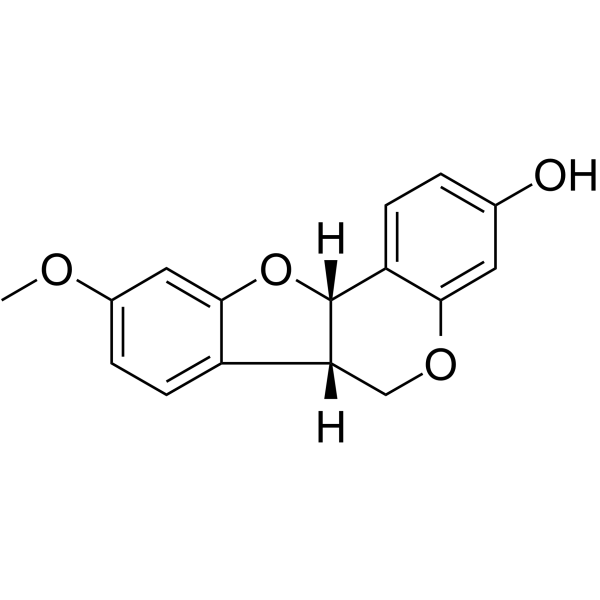 0 ImagesCat. No.: HY-N6052CAS No.: 33983-39-0Synonyms: (+)-3-Hydroxy-9-methoxypterocarpan(+)-Medicarpin, a pterocarpan, is a type of isoflavonoid isolated from several medicinal plant species with various biological effects, including Sophora japonica, Zollernia paraensis and Platymiscium yucatamun, Machaerium aristulatum, Platymiscium floribundum, and so on. (+)-Medicarpin potently inhibits osteoclastogenesis and promotes bone healing and increases bone mass by osteoblast differentiation with estrogen receptor (ER) β-mediated osteogenic action.




